
Guide
How to get more work as an electrician
This list is ordered by what it costs you, cheapest first, and every number on the page has its source next to it. The free things come before the paid things. One of the free things is a register you are already paying for and probably never look at.

The short version
- Finish your Google Business Profile. Free — Google's own words are “You can add or claim your business at no charge”.
- Check your entry on the Registered Competent Person Electrical register. Free, and already inside the scheme membership you pay for every year. Landlords search it by postcode.
- Ask every customer for a review. Free, allowed, and the rules on it are short.
- Turn word of mouth into a routine you write down. Free, and the hardest one on the list, because it is a set of habits rather than something you buy.
- Cards, the van, local Facebook pages. Pennies to tens of pounds. Sparkies argue about the van, and both sides have a point.
- Lead sites and directories. From £30 a month upwards. Two of the six will not publish a price at all.
A website is not in that six, and that is not an oversight. It is further down, in the section where I say what it will not do.
Before any advice
What the trade actually says
No opinion in this section. Just what sparkies wrote, with the name they wrote it under and a link to the thread, so you can go and read the whole thing rather than take my word for the edited version.
On the state of the market, a poster called Mildly_moist in an r/ukelectricians thread said that on the south coast “there seems to be a glut of sparks”. Posted in 2025.
The same poster said what keeps his own diary going: lettings agents, plus one reliable contact in the building trade, with small domestic jobs filling the gaps between. And on directories, he said not to start with Checkatrade or MyBuilder — but that a Google profile is worth having, and worth collecting reviews on.
Louy40, in the same thread, has been self-employed twenty years and says it never becomes steady. Two decades in, the quiet months still frighten him.
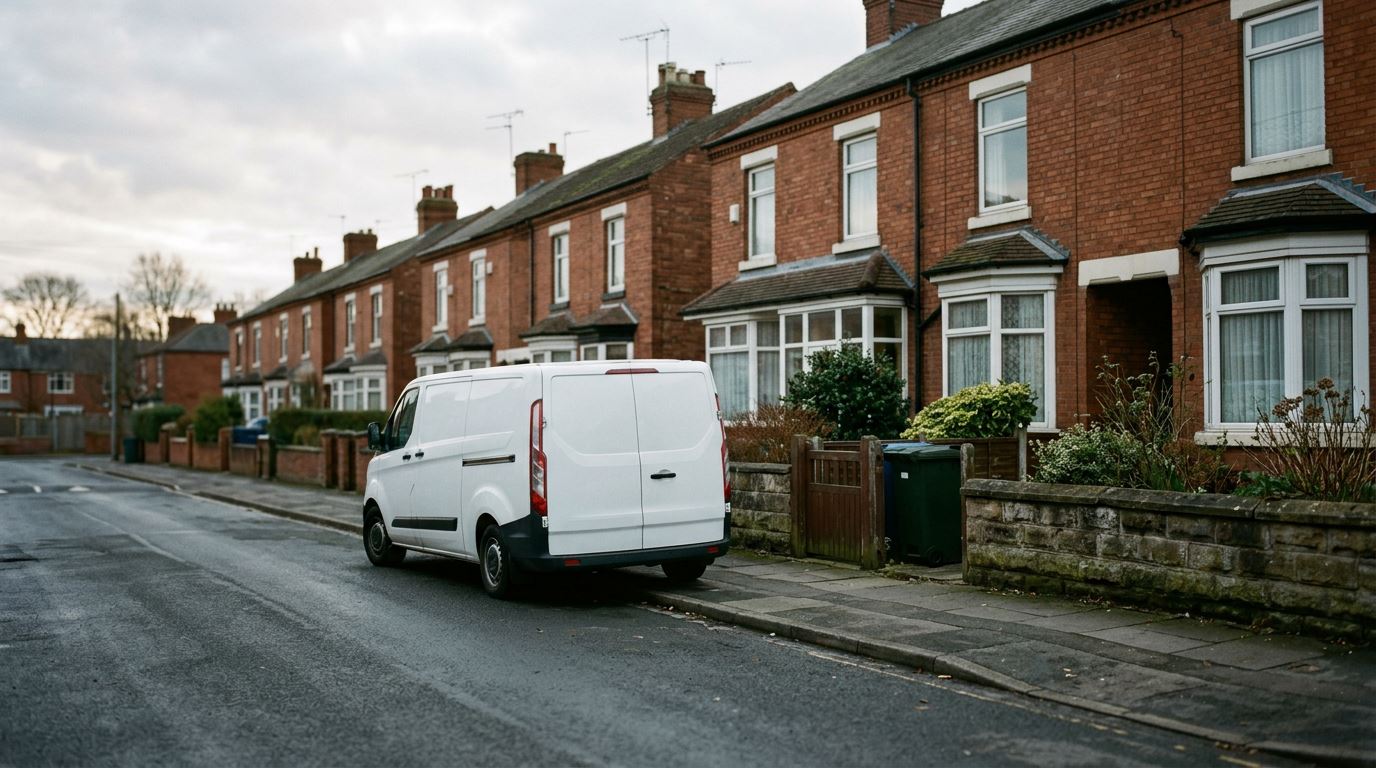
On advertising, SacrificialPigeon wrote: “The best advert is a sign written van”. Further down the same thread, Inglorious_Twatface made the obvious counter-point: it advertises just as clearly to the people who break into vans.
And on an ElectriciansForums thread from 4 April 2024, a staff member posting as James put it as plainly as it can be put: “Word of mouth is the best advertising you will ever find” — and then said the obvious thing back, which is that this is not much use on the day you have no previous customers.
Free, and first
The free listing you probably have not finished
A Google Business Profile costs nothing. That is Google's word, not mine: “You can add or claim your business at no charge”. If you do one thing off this page, it is this one, and it is the thing the lead-site salesman will never mention to you.
Google publishes what decides local results, and there are three things in it: relevance, distance and prominence. Relevance is how well your profile matches what was typed. Distance is how far you are from the person searching. Prominence, in Google's own description, is “based on info like how many websites link to your business and how many reviews you have”.
Google does not rank those three against each other, and neither will I. What Google does say, on the same page, is the sentence worth reading twice if anyone has ever offered to sell you a position:
“There's no way to request or pay for a better local ranking on Google.”
Google Business Profile Help, “Improve your local ranking on Google”
Nobody can sell you that. Not the directories, not an agency, not me. If a caller tells you otherwise, you have just learned everything you need to know about the call.
Setting one up is not instant. Google says a “verification review can take up to five working days”, and where video verification is offered to you, Google recommends taking it.
The place most sparkies stall is the address, because you work out of a van and you do not want your house on a map. That has a proper answer and it takes about a minute: here is what to do about your home address.
You are already paying for this
The register you already pay for
Every electrician registered with a competent person scheme is listed
on the Registered Competent Person Electrical register
at electricalcompetentperson.co.uk. It is a free public
search, by postcode, aimed at homeowners and landlords. In its own
words, the people on it “have been authorised by Government
to self-certify that their work is compliant with Building
Regulations”.
It went live on 30 June 2014, with a launch in Parliament two days later. It is not a new gimmick and it is not a directory selling you anything.
Here is the part worth ten minutes of your evening. You are already paying for it. Your scheme membership puts you on that register whether you look at it or not, and a landlord checking whether a sparky is genuine is exactly the sort of person who ends up on it. So go and search your own postcode and read your own entry the way a stranger would. Is the trading name the one on your invoices? Is the contact detail one you actually answer? Is the area right?
NICEIC and NAPIT run their own contractor searches as well. Neither would load for me on the day I checked this page, so I am not going to describe how they work. Go and look at yours.
The one that actually works
Word of mouth is not a strategy until you write it down
Everybody says word of mouth is the best advertising. Almost nobody says what it is made of. On ElectriciansForums, a staff member did: nine points, in order, describing what being easy to recommend looks like from the customer's side.
The whole list is on that thread from 4 April 2024 and worth reading. Four of the nine do most of the work.
1. Answer the phone
You cannot answer it up a ladder with a consumer unit half out. Nobody expects you to. What you can do is ring back the same day, every time, and treat that as part of the job rather than something you get to when the van is unloaded. Most people ring three sparkies. The one who rings back is often just the one who rings back.
2. Do not promise what you cannot do
A Tuesday you will not make is worse than a Thursday you will. The customer forgives the date. They do not forgive being messed about, and being messed about is the story they tell their neighbour.
3. Leave it clean
Chase dust on a carpet undoes a perfect first fix. This one costs you fifteen minutes and a dust sheet, and it is the single most repeated thing customers say about tradespeople they recommend.
4. Put the quote in writing, and get the yes in writing
The forum list says it plainly: for anything that is not trivial, send the quote by email and ask for an email back confirming it. That is not bureaucracy. It is the thing that stops the argument at the end about what was and was not included, and the argument at the end is what turns a happy customer into a review you did not want.
Word of mouth does not have to come from customers
A poster called MrBfJohn in the r/ukelectricians thread made a point that is easy to miss: the recommendations do not have to come from householders. Other trades pass work on. So do other electricians, when they are booked up or when the job is not their sort of thing. A plumber and a joiner who know you are reliable are worth more than most paid advertising.
And the unfashionable stuff still works
In the same thread, Comfortable_Gate_878 described covering Cumbria the old way: cards left in shops, the butcher's, the chip shop, the post office and the library, plus posts in local Facebook pages. It is not clever and it is not scalable. It also costs about the price of a box of cards.

Repeat work
The work that comes back every five years
Most work is one job and goodbye. Landlord EICR work is not, and that is the whole argument for chasing it.
Under the Electrical Safety Standards in the Private Rented Sector (England) Regulations 2020, a private landlord has to have the installation inspected and tested “at intervals of no more than 5 years”. The landlord must get a report giving the date of the next inspection, hand it to an existing tenant within 28 days, and give it to the local authority within 7 days if they ask for it in writing.
There is a financial penalty behind it. The regulations say a penalty “must not exceed £30,000”. Read that as it is written: it is the ceiling on what a local authority can impose, not a bill anybody automatically gets.
The size of the market is published too. In 2024–25 the private rented sector was 4.7 million households, 19% of all households in England — that is the English Housing Survey, GOV.UK, published on 9 July 2026.
But the reason to chase it is not the regulation. It is the calendar. A poster called Embarrassed-Air7202 in the r/ukelectricians thread, twenty years in the trade, made the point that EICR work suits landlords because it comes back round every five years, as long as you keep the customer happy in between. One landlord with six flats is six jobs now and six jobs in five years, plus the remedials in the middle, plus the call when a tenant trips something at nine at night.
What changes on 1 October 2026
If you do EICRs, this one matters to you personally. From 1 October 2026, under the scheme registration rules, everybody carrying out a periodic inspection needs their own Level 3 periodic inspection and testing qualification — City & Guilds 2391-51 or 2391-52, or an equivalent — plus two years of documented experience and ongoing CPD. The old arrangement, where one Qualified Supervisor at a firm covered everyone under him, ends.
The source is the IET's Electrotechnical Assessment Specification, with NICEIC's explanation of what it means in practice. Be clear on what this is: it is a registration requirement of the schemes, not an Act of Parliament. The 2020 Regulations above are law. This is the rulebook you sign up to when you register, which is a different thing, and anyone telling you it is “the law” has not read it.

The paid route
What the lead sites cost
Six platforms, one table, and then a link. There is a whole page on this site that pulls these apart properly, and it does not need doing twice.
| Platform | Published price | What their own pages say |
|---|---|---|
| Checkatrade | Free £0 · Approved £30/mo · Growth “from £59/mo” | Their own pricing FAQ says the Approved tier is the one that is not about winning work — it buys the tick, not leads. They also claim “48,000+ quality trades partner with us”, and run a “first month free” offer on and off. |
| MyBuilder | Pay per lead, “can start from £7” | You pay only when the homeowner shortlists you. No joining fee and no membership fee. The lead fee is variable. |
| Rated People | Nothing published | They do publish that “a max of 3 tradespeople can give quotes for each job lead”. The price is not on the site. |
| Bark | £1.80 per credit | How many credits a lead costs is not published, so the cost of a lead cannot be worked out before you buy. |
| Which? Trusted Traders | £248 one-off assessment, then £66/mo or £797/yr for nought to three staff | The only one of the six with a complete published price list. |
| TrustATrader | Nothing published | No price anywhere on the site. |
Two of the six will not tell you what it costs until you are on a call with them. That is a finding on its own, and you are allowed to treat it as one.
As for what a subscription actually returns, nobody publishes that either. What exists is what members say. In the r/ukelectricians thread, Special-Improvement4 reported paying over £2,000 for a TrustATrader advert and getting at most around £500 of work out of it. That is one man's account of his own spend, not a published price, and I am giving it exactly that weight.
If you want the contracts, the exit fees and the twelve-month terms gone through line by line, that is on the other page: what the directories and a website really cost.
Reviews
Reviews, and the rule that changed in 2025
Reviews are one of the things Google names inside prominence, and the CMA's own research estimates that “more than half of UK adults use online reviews”. That is the only sourced number I have found on why they matter, so it is the only one on this page.
What changed is the law around them. Since April 2025, under the Digital Markets, Competition and Consumers Act 2024, fake reviews and reviews that hide the fact they were incentivised are a banned practice. The CMA's wording: “Behaviour which falls under a banned practice is automatically unfair and illegal.”
That sounds worse than it is for an honest sparky, because asking is fine. What is not fine is paying, discounting or nudging for it. The detail is short and it is on its own page: what you are allowed to ask for.
My end of it
What a website does, and what it does not
I build websites for electricians, so read this section with that in mind. It is here at number nine rather than number one because that is where it belongs.
What it will not do
It will not bring you work on its own. A site nobody has any reason to land on is a business card you paid too much for.
It will not be quick. Everything above — the profile, the register, the reviews, the habits — moves faster than a website does.
It does not replace the Google Business Profile. If you have to pick one, pick the profile, and it is free.
And if the actual problem is that people already find you and simply cannot get hold of you, the answer is not ten pages. The answer is one page with a working way to reach you on it, and half an hour spent returning calls.
What it does do
It serves the search where nobody types your name. Somebody who already knows you will find you either way. Somebody typing the job and the town has never heard of you, and a page about that job in that town is the only thing that can meet them.
It is yours. A lead you rent stops the day you stop paying. A page you own does not, and neither does the domain, provided it is registered in your name.
And it lets a landlord read you before they contact you. Someone deciding whether to hand you eleven flats wants to read for ten minutes without speaking to anybody. There has to be something to read.
You can see a finished sparky site — that is a demo for a made-up firm, not a real client's site. And if you want one building, that is what I do. That is the only time I will mention it on this page.
Straight answer
If you only do one thing this week
Open your Google Business Profile on your phone tonight. Check three things: that the service area lists the towns you actually drive to, that the address setting is doing what you want it to do, and that the phone number and hours are ones you will honour. Then close it.
That is ten minutes, it costs nothing, and it will do more for you this month than anything on this page you would have to pay for.
Questions
Questions sparkies ask
How do you get a steady flow of work when you go self-employed?
The honest answer from the trade is that it never becomes steady. One sparky twenty years self-employed said in an r/ukelectricians thread that the quiet months still frighten him. What smooths it out is having more than one source at once: repeat customers, one or two lettings agents, another trade who passes work on, and a Google profile people can find.
Is Checkatrade worth it for an electrician?
Their published tiers are free, £30 a month for Approved, and “from £59 a month” for Growth. Their own pricing FAQ says the Approved tier is the one that is not about winning work — it buys the tick, not leads. The contracts and terms are gone through properly on the costs page.
Do I need a website, or is a Google listing enough?
For a lot of sparkies the listing is enough, and I would rather say that than sell you something. If your work comes from recommendations and people only look you up to check you are real, a finished Google profile does that job for nothing. A website earns its keep when you want the searches where nobody types your name — the job and the town.
How long does it take to show up on Google Maps?
Google says a verification review can take up to five working days, and recommends video verification where your business is eligible for it. Profile edits after that usually appear in about ten minutes. More on setting it up on the home address page.
Can I pay to be at the top of Google Maps?
No, and this is Google's own sentence rather than mine: “There's no way to request or pay for a better local ranking on Google.” Google Ads and Local Services Ads are separate paid products that put you in an ad slot, not in the local results.
What is the cheapest way to get more work?
Three things, all free or nearly. Finish the Google Business Profile — “at no charge”, in Google's words. Check your entry on the Registered Competent Person Electrical register, which your scheme membership already pays for. Then ask every customer for a review. After that, a box of cards.
Are lead sites worth it?
Nobody publishes what they return, so nobody can answer that honestly with a number. What is published is the price: Bark at £1.80 a credit without saying how many credits a lead costs, MyBuilder from £7 a lead, Which? Trusted Traders at £248 plus £66 a month, and Rated People and TrustATrader publishing nothing at all.
Should I sign-write the van?
The trade argues about this and both sides are right. On r/ukelectricians one poster wrote “The best advert is a sign written van”. Another pointed out in the same thread that it advertises just as clearly to the people who break into vans. If you park it on your drive overnight with tools in it, that is the trade-off you are making.
Is EICR work worth chasing?
It comes back. Private landlords in England must have the installation inspected at intervals of no more than five years under the 2020 Regulations, and the private rented sector was 4.7 million households in 2024–25. Note the scheme registration rules change on 1 October 2026: you will need your own Level 3 periodic inspection qualification, two years of documented experience and ongoing CPD.
Where this comes from: Google's own help pages, the Registered Competent Person Electrical register, legislation.gov.uk, GOV.UK's English Housing Survey and the CMA's review guidance, the IET's Electrotechnical Assessment Specification, and the platforms' own published pricing pages. The quotes are from real, named posters on r/ukelectricians and ElectriciansForums, linked above so you can read them in full. Nothing on this page is an industry average or a figure I heard somewhere.